Sleep Reset Culture
Why quality sleep is becoming the ultimate productivity trend

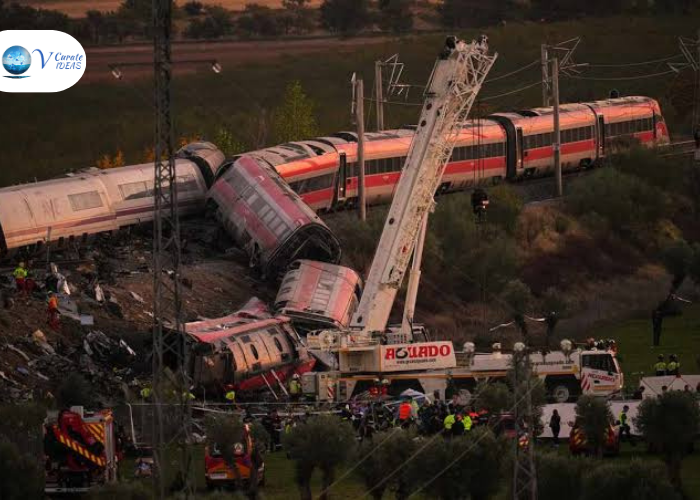
Spanish authorities have confirmed that all 69 people killed in the high-speed train collision near Urda, in the province of Toledo, have now been identified. The latest update was reported on November 3, 2026, following one of the country's deadliest railway accidents in recent years.
The collision occurred on October 28, when a Renfe high-speed train struck the rear of a stationary Iryo train on the Madrid-to-Seville railway corridor. The accident took place near Urda in central Spain and resulted in multiple carriages leaving the tracks.
Emergency services, police officers, railway personnel and rescue teams were deployed to the scene. Recovery operations involved searching damaged carriages, assisting injured passengers and identifying those who had lost their lives.
The confirmed death toll remains at 69. According to the latest information reported by Malaysian national news agency Bernama, citing Spanish authorities, all victims have been identified. The victims included 54 Spanish nationals and 15 foreign nationals.
Authorities reported that the foreign victims included citizens of the United States, Australia, Japan, Argentina, Canada, the Czech Republic, France, Mexico, Portugal and Tunisia.
The identification process involved forensic investigations, fingerprint analysis and DNA testing. These procedures were necessary to establish the identities of victims following the extensive damage caused by the collision.
The latest update also reported that 29 injured people remained in hospital. Medical teams have continued providing treatment to those affected by the accident.
The incident has raised renewed questions about railway safety and the systems used to manage high-speed train operations. Preliminary reports have examined a computer-related failure affecting railway signalling and subsequent instructions given to train operators. However, the investigation must establish the complete sequence of events before responsibility or the precise causes can be determined.
Spain has one of Europe's most extensive high-speed railway networks, connecting major cities through services operated by public and private companies. The accident has therefore attracted considerable attention from passengers, transport organisations and railway safety experts.
The collision also follows another fatal railway accident in Spain earlier in 2026, increasing public concern about infrastructure reliability, operational procedures and railway safety standards.
Authorities are expected to continue examining technical records, communications between railway control centres and the circumstances surrounding the movement of both trains.
For passengers, the incident highlights the importance of effective signalling systems, clear communication and reliable emergency procedures in modern railway networks.
Timeline clarification: The collision happened on October 28, 2026. November 3, 2026, refers to the latest victim-identification update, not the date of the accident.
The investigation remains important for determining what happened and identifying any changes required to prevent similar tragedies in the future.

Why quality sleep is becoming the ultimate productivity trend

Build skills that keep your career ahead in an AI driven world

The Rise of Self-Care: A Blessing or a Curse? The Line Between Self-Care and Self-Absorption

Modern travel is becoming more about social media validation, aesthetic content, and posting moments than truly living them.

YouTube is more competitive than ever, but small creators can still grow with strategy, consistency, and niche content.

Smoking and vaping debate exploring health risks, personal freedom, addiction concerns, and whether a full ban is justified.
© Copyright 2019 - 2026, All Rights Reserved