Sleep Reset Culture
Why quality sleep is becoming the ultimate productivity trend

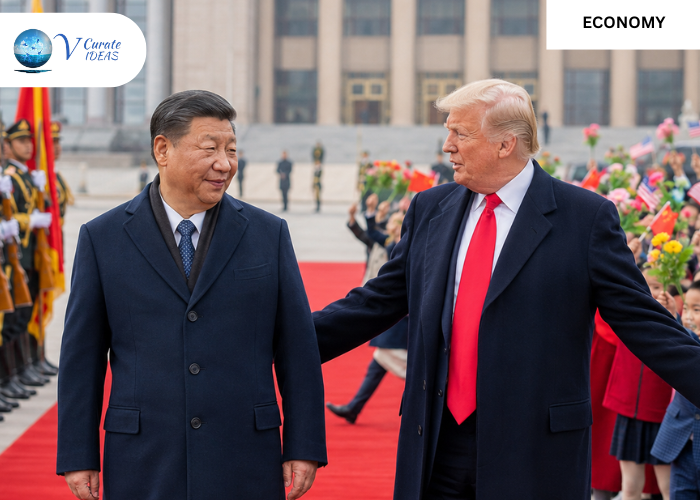
The high stakes summit between Donald Trump and Xi Jinping in Beijing has drawn global attention as the leaders of the world’s two largest economies attempted to reset relations shaped by years of trade tensions, technology battles and geopolitical rivalry. Although the visit featured grand ceremonies, strong diplomatic language and the presence of some of America’s most powerful business leaders, the summit ended without a major trade breakthrough, leaving markets and analysts cautious about what was actually achieved.
Trump arrived in Beijing alongside a powerful delegation representing industries central to the future global economy including agriculture, aviation, electric vehicles and artificial intelligence. Among the most closely watched figures were Elon Musk and Jensen Huang, whose appearance highlighted how important advanced technology and manufacturing have become in the relationship between Washington and Beijing. Musk’s company Tesla depends heavily on Chinese production and consumers through its Shanghai Gigafactory, while Nvidia remains deeply connected to the global AI race despite increasing American export restrictions on advanced chips.
During the opening events, Trump praised ties between the two countries and described the relationship as “the world’s most consequential economic partnership.” The American president also claimed the summit could become “the biggest summit ever,” reflecting his effort to present the talks as a major diplomatic success. Chinese President Xi Jinping responded with similarly warm language, speaking about cooperation, mutual growth and expanded opportunities for American businesses operating in China. Xi stated that China’s “doors will open wider” and promised broader prospects for foreign companies looking to access the Chinese market.
Despite the optimistic tone, the summit produced limited concrete results. Trump revealed during a television interview that China had agreed to purchase 200 Boeing aircraft, marking the country’s first major order of American made commercial jets in nearly ten years. However, the announcement failed to impress investors who had expected much larger agreements from the visit. Shares in Boeing dropped after the comments became public, reflecting disappointment over the scale of the deal.
The summit also failed to fully resolve uncertainty surrounding the fragile trade truce reached earlier in the year. That agreement temporarily paused steep tariff increases between the two countries and reduced fears of a full scale trade war. However, American officials acknowledged that many difficult negotiations still remain unresolved. US Trade Representative Jamieson Greer confirmed that Washington has not yet decided whether the current tariff suspension will continue beyond November. Both governments announced plans to create a “Board of Trade” designed to manage economic disputes without constantly reopening major tariff negotiations, though officials admitted the mechanism remains far from fully operational.
Technology issues continue to represent the deepest divide between the United States and China. Washington’s restrictions on advanced semiconductors and chip making equipment remain in place as the United States attempts to slow China’s access to cutting edge artificial intelligence capabilities. Beijing has repeatedly criticized these measures, arguing that they are unfair attempts to contain Chinese industrial development. Although AI was expected to dominate discussions during the summit, neither side released detailed public information about those conversations.
Taiwan emerged as one of the most sensitive topics discussed during the closed door meetings. Xi Jinping reportedly warned Trump that mishandling the Taiwan issue could push the two nations toward conflict. Chinese officials described Taiwan as the most important issue in China US relations, signaling that Beijing increasingly views the matter as directly connected to economic and trade cooperation. The warning demonstrated how security tensions continue to shape every aspect of the relationship between the two powers.
The summit also touched on global concerns beyond trade. Trump reportedly sought Chinese cooperation regarding tensions in the Middle East, particularly the stability of oil shipping through the Strait of Hormuz, one of the world’s most critical energy routes. China, which relies heavily on imported oil, expressed support for keeping shipping lanes open and called for a lasting ceasefire in the region. Rising oil prices and supply disruptions remain a major concern for both economies and global markets.
While the summit delivered dramatic images, ceremonial welcomes and promises of future cooperation, it stopped short of producing the transformative agreements many observers had anticipated. Analysts believe the talks revealed how both countries are trying to stabilize relations while still competing aggressively in technology, trade and global influence. Further negotiations are expected before Xi Jinping visits the White House later this year, where both sides hope to finally secure a more meaningful trade agreement.
For now, the Beijing summit demonstrated that despite warmer rhetoric and symbolic gestures, the United States and China remain divided by deep economic, technological and geopolitical fault lines that continue to shape the future of the global economy.

Why quality sleep is becoming the ultimate productivity trend

Build skills that keep your career ahead in an AI driven world

The Rise of Self-Care: A Blessing or a Curse? The Line Between Self-Care and Self-Absorption

Modern travel is becoming more about social media validation, aesthetic content, and posting moments than truly living them.

YouTube is more competitive than ever, but small creators can still grow with strategy, consistency, and niche content.

Smoking and vaping debate exploring health risks, personal freedom, addiction concerns, and whether a full ban is justified.
© Copyright 2019 - 2026, All Rights Reserved