Sleep Reset Culture
Why quality sleep is becoming the ultimate productivity trend

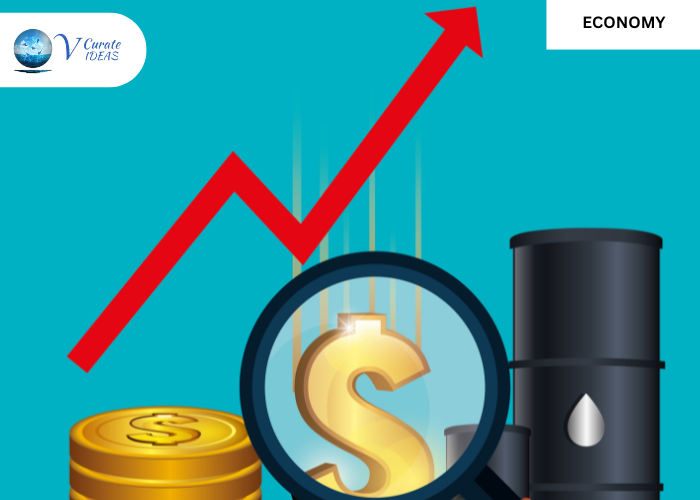
Global oil prices climbed sharply in Asian trading on Monday after Donald Trump rejected Iran’s latest proposal aimed at ending the ongoing conflict involving the United States, Israel, and Iran. The dramatic rise in prices reflects growing fears that tensions in the Middle East could further disrupt global energy supplies and deepen instability across international markets.
International benchmark Brent crude rose by 4.1%, reaching $105.50 per barrel, while US West Texas Intermediate crude climbed 4.4% to $99.80 a barrel. The surge came immediately after Trump publicly criticized Iran’s response to American peace proposals, calling it “totally unacceptable” in a post shared on Truth Social.
The conflict has already placed enormous pressure on global energy markets since fighting began on 28 February following large-scale US and Israeli air strikes on Iran. Although a ceasefire was introduced in April to create space for negotiations, the situation remains tense, with repeated military threats and occasional exchanges of fire continuing in the region.
According to Iran’s semi-official Tasnim news agency, Tehran’s proposal was delivered through Pakistan, which has been acting as a mediator between the two sides. Iran reportedly demanded an immediate end to the war, guarantees that no future US-Israeli attacks would occur, compensation for war damages, and an end to the American naval blockade around Iranian ports.
Trump, however, appeared to reject the terms outright. Posting online after reviewing the proposal, he wrote: “I have just read the response from Iran’s so-called ‘Representatives.’ I don’t like it — TOTALLY UNACCEPTABLE.”
Reports from Axios suggest that the US proposal included demands for Iran to suspend uranium enrichment activities and restore safe navigation through the Strait of Hormuz, one of the world’s most important oil shipping routes.
The Strait of Hormuz has effectively remained shut since shortly after the war began, severely affecting international oil and gas transportation. Roughly 20% of the world’s oil and liquefied natural gas normally passes through the narrow waterway connecting the Persian Gulf to global markets.
Iran has repeatedly threatened vessels attempting to cross the strait and has warned neighboring Gulf countries against assisting US naval operations. The disruption has caused major concerns among governments, shipping companies, and financial markets worldwide.
Benjamin Netanyahu also signaled that the conflict is far from over. He stated that the war against Iran cannot truly end until Tehran’s enriched uranium stockpiles are completely dismantled. Netanyahu’s remarks reinforced fears that negotiations could collapse if both sides remain unwilling to compromise on military and nuclear issues.
The ceasefire announced in early April had temporarily eased tensions and allowed diplomatic talks to continue. On 21 April, Trump extended the truce indefinitely to give Iran additional time to produce what he described as a “unified proposal.” Despite that extension, the latest disagreement now threatens the fragile pause in fighting.
Energy markets have reacted strongly throughout the conflict. Oil prices initially spiked after the first air strikes in February, later falling slightly after the ceasefire announcement, before climbing again as uncertainty returned. Brent crude has now moved back above the critical $100-per-barrel mark, highlighting growing investor anxiety over future supply disruptions.
Major global energy companies have benefited financially from the surge in prices. Saudi energy giant Saudi Aramco announced that its profits rose more than 25% during the first quarter of 2026 compared to the same period last year. Aramco chief executive Amin Nasser said the company’s extensive pipeline infrastructure helped maintain exports despite disruptions in Gulf shipping routes.
Other oil companies have also reported massive gains. BP revealed that its profits more than doubled during the first quarter of the year, while Shell also announced significantly higher earnings as oil and gas prices surged worldwide.
Analysts warn that if the Strait of Hormuz remains blocked or if fighting escalates again, oil prices could rise even further, increasing fuel costs, transportation expenses, and inflation across many countries.
Governments around the world are now closely monitoring diplomatic negotiations, fearing that a prolonged disruption in Gulf energy supplies could damage the fragile global economy and trigger wider geopolitical instability throughout the Middle East.

Why quality sleep is becoming the ultimate productivity trend

Build skills that keep your career ahead in an AI driven world

The Rise of Self-Care: A Blessing or a Curse? The Line Between Self-Care and Self-Absorption

Modern travel is becoming more about social media validation, aesthetic content, and posting moments than truly living them.

YouTube is more competitive than ever, but small creators can still grow with strategy, consistency, and niche content.

Smoking and vaping debate exploring health risks, personal freedom, addiction concerns, and whether a full ban is justified.
© Copyright 2019 - 2026, All Rights Reserved