Why Personal Style Is Winning Over Fast Fashion Trends Today
Discover why personal style is replacing fast fashion as the new trend for confident everyday choices

The internet was once seen as a place where information flowed freely, but still carried a sense of human authenticity. Today, that line is getting increasingly blurred. With the rise of AI-generated content, deepfakes, automated writing tools, and hyper-realistic images, a serious question is emerging: are we still able to tell what is real online? The answer is becoming more complicated with every passing day.
One of the biggest changes is the explosion of AI-generated media. Images, videos, and even voices can now be created that look and sound completely real. A face that never existed can appear in a news story. A voice that belongs to no human can deliver a convincing speech. For the average user scrolling through social media, it is almost impossible to immediately detect what is authentic and what is artificially created. This creates a growing trust gap in digital content.
Another major issue is deepfake technology. It has evolved from being a novelty into something far more powerful and concerning. Political figures, celebrities, and even ordinary people can be digitally manipulated into saying or doing things they never actually did. This not only spreads misinformation but also raises questions about how we verify truth in a world where seeing is no longer believing.
At the same time, AI writing tools have flooded the internet with content. Articles, comments, reviews, and even opinion pieces can now be generated within seconds. While this increases productivity, it also creates a saturation of similar-sounding content. The internet feels less human and more automated. Readers often struggle to distinguish between genuine human expression and machine-generated text designed to imitate it.
The problem is not just about deception it is about perception. When people constantly encounter AI-generated content, their sense of reality begins to shift. Even real content can start to feel suspicious. This leads to a condition where users become digitally skeptical, questioning everything they see, even when it is authentic. Over time, this can weaken trust in journalism, social platforms, and online communities.
However, AI is not entirely negative in this situation. It also helps in content moderation, fact-checking, and detection systems that aim to identify fake content. Many platforms are actively working on labeling AI-generated material and improving transparency. But the challenge remains that technology used to detect fake content often struggles to keep up with the speed at which new AI content is created.
Another important angle is human behavior. The issue is not only AI itself, but also how people consume information. In the age of fast scrolling and viral trends, users often prioritize speed over accuracy. This makes it easier for misleading AI content to spread before it can be verified. The combination of rapid consumption culture and advanced AI tools creates the perfect environment for confusion.
Best AI Tools for Making Money Online in 2026
In conclusion, AI is undeniably reshaping how we experience the internet. It is making it harder to clearly separate what is real from what is generated. While it offers creativity and innovation, it also introduces uncertainty and doubt. The future of online truth will depend on how well technology, platforms, and users adapt to this new reality. One thing is clear: in the AI era, questioning what we see online is no longer optional it is essential.
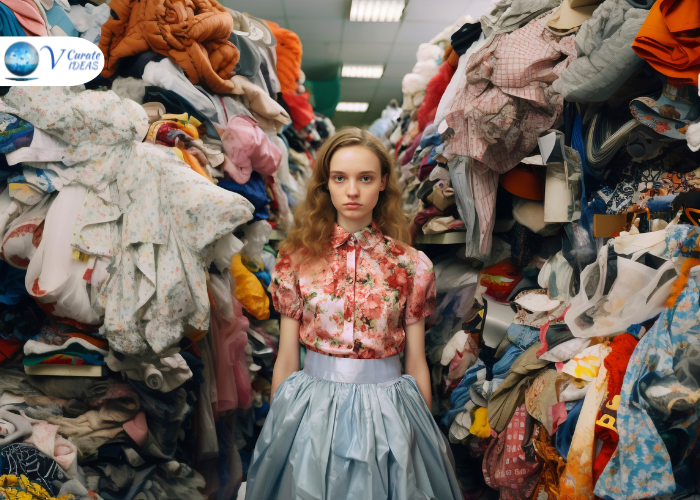
Discover why personal style is replacing fast fashion as the new trend for confident everyday choices

Explore subscription fatigue streaming apps costs and how digital habits are shifting online today

Elon Musk is famous for being an environmental entrepreneur and businessman. Let's take a survey to know why is he so famous :)

This survey is aimed at knowing the way social media is affecting our youth in both positive and negative ways.

The strongest careers may belong to people who can combine these skills rather than rely on just one.

Your view on AI side hustles
© Copyright 2019 - 2026, All Rights Reserved