YouTube Creator Struggle
YouTube is more competitive than ever, but small creators can still grow with strategy, consistency, and niche content.

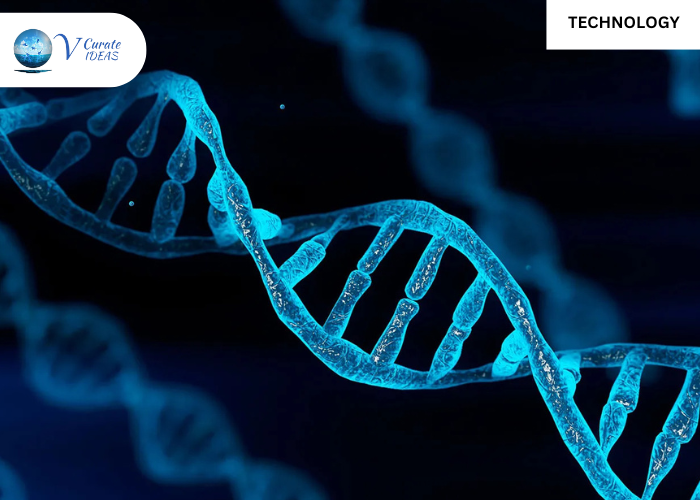
A groundbreaking scientific initiative has been launched to create artificial human DNA from scratch, marking a major leap forward in the field of synthetic biology. Funded by an initial £10 million grant from the Wellcome Trust, the project aims to construct the basic building blocks of life, potentially unlocking new therapies for currently incurable diseases. Spearheaded by leading UK institutions including the MRC Laboratory of Molecular Biology in Cambridge and the Wellcome Sanger Institute, the Synthetic Human Genome Project is considered one of the most ambitious genetic engineering efforts to date. Researchers plan to develop technologies capable of assembling large sections of human DNA, eventually aiming to synthetically construct an entire human chromosome.
“The sky is the limit,” said Dr. Julian Sale, one of the lead scientists. “We’re looking to create disease-resistant cells that coulhelp regenerate organs like the liver, heart, and immune system, and promote healthier aging.”
The initiative builds on the legacy of the Human Genome Project, completed 25 years ago, which successfully mapped human DNA. Unlike that effort, this project doesn't just read DNA—it aims to manufacture it molecule by molecule. However, the project is not without controversy. Critics warn of ethical concerns and potential misuse. “The science can be repurposed for harm,” cautioned Dr. Pat Thomas of campaign group Beyond GM. “There’s nothing to stop bad actors from creating biological weapons or genetically enhanced humans.”
Professor Bill Earnshaw, a geneticist from the University of Edinburgh, echoed those concerns: “The genie is out of the bottle. If someone has the equipment and intent, it's nearly impossible to stop them from synthesizing anything.”
ZXC\TY,.\
To address these issues, the project includes a parallel social science research programme aimed at engaging the public, ethicists, and policymakers. “We need to understand how society feels about synthetic DNA and its implications,” said sociologist Prof. Joy Zhang of the University of Kent.
Dr. Tom Collins, who approved the funding, emphasized the importance of responsible innovation: “This technology will be developed eventually. By acting now, we can ensure it's done ethically, transparently, and for public good.”
Though the work will remain confined to laboratory settings and test tubes, the potential for profound medical advances—and the ethical debates they bring—are already generating intense global interest.

YouTube is more competitive than ever, but small creators can still grow with strategy, consistency, and niche content.

Smoking and vaping debate exploring health risks, personal freedom, addiction concerns, and whether a full ban is justified.

Why social media comparison feels impossible to escape today.

AI is blurring truth online, making it harder to trust what we see, read, and believe every day.

Kylie brought bold sculpted couture while Kendall chose elegant goddess styling, both creating strong Met Gala 2026 fashion moments.

Dating apps make it easy to meet people, but often reduce emotional depth and real meaningful connection.
© Copyright 2019 - 2026, All Rights Reserved