Sleep Reset Culture
Why quality sleep is becoming the ultimate productivity trend


What was once considered a futuristic concept has evolved into one of the most transformative forces in medicine. From detecting diseases earlier than ever before to accelerating drug discovery and personalizing treatment plans, AI is redefining how healthcare is delivered worldwide.
The global AI market has experienced explosive growth over the past decade and is now valued in the hundreds of billions of dollars, with healthcare emerging as one of its fastest-growing sectors. Hospitals, research institutions, pharmaceutical companies, and public health organizations are increasingly investing in AI-powered solutions to improve patient outcomes, reduce costs, and address growing healthcare demands.
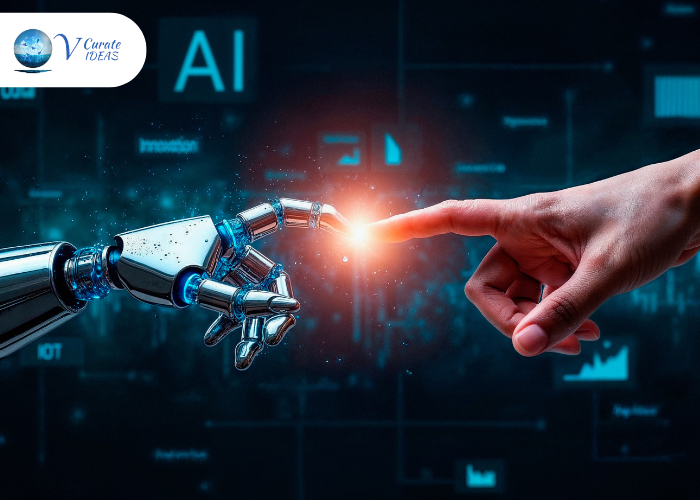
When people hear the term "artificial intelligence," they often imagine humanoid robots from science fiction movies. In reality, AI is far more practical and far more impactful.
Artificial Intelligence refers to computer systems capable of performing tasks that traditionally require human intelligence, such as learning, reasoning, problem-solving, decision-making, and pattern recognition. Rather than replacing healthcare professionals, AI serves as a powerful tool that enhances human expertise.
At the heart of modern AI are technologies such as:
Machine Learning (ML): Algorithms that learn from data and improve their performance over time.
Deep Learning: Advanced neural networks capable of analyzing vast amounts of unstructured information, including medical images, clinical notes, and genomic data.
Natural Language Processing (NLP): Systems that understand and interpret human language, enabling analysis of electronic health records and medical literature.
Generative AI: Emerging AI models that assist clinicians with documentation, patient communication, research, and decision support.
Together, these technologies are creating smarter healthcare systems capable of delivering faster, more accurate, and more personalized care.
Healthcare professionals face an unprecedented challenge: managing enormous volumes of patient data while delivering timely and accurate care. AI helps bridge this gap by rapidly processing information that would take humans days, weeks, or even months to analyze.
Patients often present with multiple symptoms that may be associated with several conditions simultaneously. AI systems can analyze clinical histories, laboratory results, imaging studies, genetic information, and population health data to identify patterns that might otherwise be overlooked.
As a result, AI contributes to:
Earlier disease detection
Improved diagnostic accuracy
Personalized treatment planning
Better prediction of clinical outcomes
Reduced administrative burden
Enhanced patient engagement
More efficient healthcare delivery
Rather than replacing physicians, AI empowers healthcare professionals to make more informed decisions while spending more time focusing on patient care.
Diagnostic medicine has become one of AI's most successful applications.
AI systems can analyze:
Medical imaging (X-rays, CT scans, MRIs, pathology slides)
Electronic Health Records (EHRs)
Genomic and multi-omics data
Laboratory test results
Wearable device data
These technologies are helping clinicians identify cancers, cardiovascular diseases, neurological disorders, infectious diseases, and rare genetic conditions at earlier stages when treatment is most effective.
Advanced AI models can now detect subtle abnormalities in medical images with accuracy comparable to expert specialists in certain clinical scenarios.
The traditional "one-size-fits-all" approach to medicine is gradually being replaced by personalized care.
AI enables precision medicine by analyzing:
Genetic profiles
Clinical histories
Lifestyle factors
Biomarker data
Treatment responses
This allows healthcare providers to tailor therapies to individual patients, improving effectiveness while reducing adverse effects.
AI is also accelerating drug development by identifying promising compounds, predicting drug interactions, and shortening the timeline from laboratory discovery to clinical application.
Modern surgical systems increasingly integrate AI to support surgeons during complex procedures.
AI-assisted surgical platforms can:
Enhance surgical precision
Improve visualization
Reduce procedural risks
Provide real-time decision support
Enable minimally invasive interventions
These advancements contribute to faster recovery times and improved patient outcomes.
A significant portion of healthcare spending is consumed by administrative processes. AI is helping streamline operations through:
Automated documentation
Appointment scheduling
Resource allocation
Revenue cycle management
Insurance claims processing
Supply chain optimization
By reducing administrative workloads, healthcare professionals can devote more time to patient care.
AI plays a critical role in public health by analyzing large-scale health data to identify trends and predict disease outbreaks.
Applications include:
Disease surveillance
Epidemic prediction
Health risk assessment
Community health monitoring
Preventive care initiatives
Digital health education
These capabilities support proactive healthcare strategies and strengthen health systems worldwide.
Cancer remains one of the leading causes of death globally, making early detection essential.
AI-powered platforms are helping clinicians:
Detect cancers earlier
Analyze pathology slides
Interpret radiological images
Recommend evidence-based treatment options
Predict patient outcomes
Machine learning algorithms have demonstrated remarkable success in identifying skin cancers, breast cancers, lung cancers, and other malignancies from medical imaging data.
Neurological disorders present complex diagnostic and therapeutic challenges.
Recent AI-driven innovations include:
Brain-computer interfaces
Smart prosthetics
Stroke detection systems
Neurodegenerative disease prediction
Rehabilitation technologies
Researchers have successfully developed systems that help restore movement and communication capabilities for individuals with severe neurological impairments.
Cardiovascular disease remains the world's leading cause of mortality.
AI is transforming cardiology through:
Automated ECG interpretation
Cardiac imaging analysis
Risk prediction models
Remote patient monitoring
Early detection of heart failure and arrhythmias
By identifying subtle patterns invisible to the human eye, AI systems can help clinicians intervene before serious complications occur.
Despite its enormous potential, AI adoption in healthcare raises important challenges that must be addressed responsibly.
Healthcare data is among the most sensitive forms of personal information. Robust safeguards are necessary to ensure patient confidentiality and prevent misuse.
Many AI systems operate as "black boxes," making it difficult to understand how decisions are reached. Greater transparency is essential for building trust among healthcare providers and patients.
AI systems are only as good as the data used to train them. Poorly representative datasets can result in biased recommendations that may worsen healthcare disparities.
As AI becomes increasingly integrated into clinical practice, regulators worldwide are developing frameworks to ensure safety, effectiveness, and accountability.
The future of healthcare is not about replacing doctors with machines. Instead, it is about creating a collaborative model where AI enhances human expertise while healthcare professionals retain responsibility for patient care and ethical decision-making.
The coming decade is expected to bring unprecedented advancements in AI-powered healthcare.
Emerging innovations include:
Digital twins for personalized treatment simulation
AI-driven drug discovery
Predictive healthcare systems
Advanced virtual health assistants
Autonomous diagnostic support tools
Continuous monitoring through wearable technologies
As healthcare systems face increasing pressure from aging populations, chronic diseases, and workforce shortages, AI will become an essential component of delivering accessible, efficient, and high-quality care.
Artificial Intelligence has evolved from a promising technological concept into a transformative force that is reshaping healthcare worldwide. From diagnosing diseases and guiding treatment decisions to streamlining hospital operations and improving population health, AI is helping create a smarter and more patient-centered healthcare ecosystem.
Yet, with great technological power comes significant responsibility. Ensuring transparency, fairness, safety, privacy, and ethical implementation will determine whether AI reaches its full potential in medicine.
The question is no longer whether AI will influence healthcare, it already does. The real challenge lies in ensuring that this powerful technology is used wisely, equitably, and responsibly to improve health outcomes for people everywhere.
As AI continues to advance, its greatest achievement may not be replacing human intelligence, but amplifying it—enabling healthcare professionals to deliver better care than ever before.

Why quality sleep is becoming the ultimate productivity trend

Build skills that keep your career ahead in an AI driven world

Elon Musk is famous for being an environmental entrepreneur and businessman. Let's take a survey to know why is he so famous :)

This survey is aimed at knowing the way social media is affecting our youth in both positive and negative ways.

The strongest careers may belong to people who can combine these skills rather than rely on just one.

Your view on AI side hustles
© Copyright 2019 - 2026, All Rights Reserved