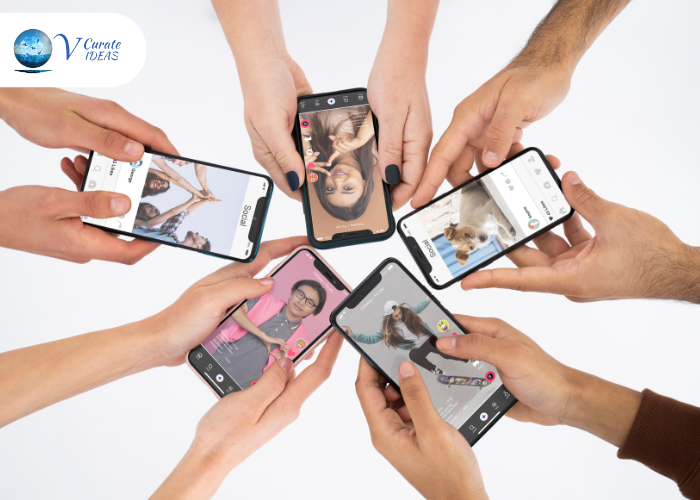
The Moment Movie Review
Dive into a cinematic journey of fame, identity, and social media culture.

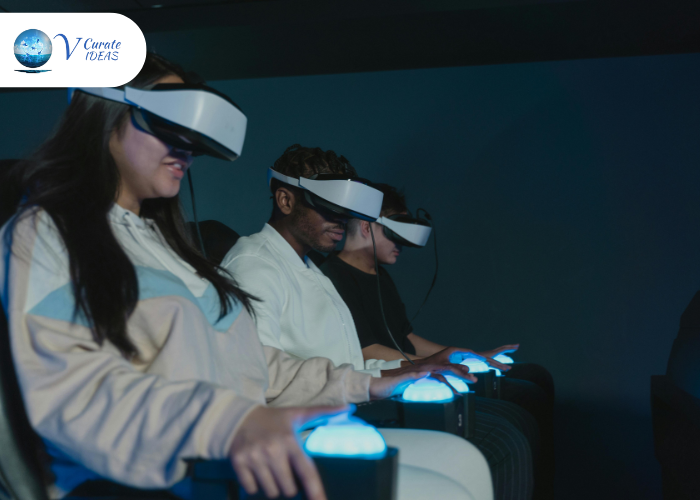
The classroom of the future is no longer limited to desks, chalkboards, or even traditional textbooks. With rapid advancements in technology, virtual reality (VR) is emerging as a groundbreaking tool in education, transforming how students learn, engage, and experience the world around them.
Virtual reality allows students to step inside environments and scenarios that were previously impossible in a traditional classroom. From exploring ancient civilizations in history class to conducting chemistry experiments in a safe virtual lab, VR creates immersive experiences that make learning interactive and memorable. This hands-on approach not only deepens understanding but also fosters curiosity and critical thinking.
One of the biggest challenges in education is keeping students engaged. VR offers a solution by turning lessons into interactive adventures. Instead of passively reading or listening, students actively participate in simulations, explore 3D models, and collaborate in virtual spaces. Research has shown that immersive learning can improve retention, increase motivation, and make complex concepts easier to grasp.
Virtual reality also has the potential to make education more accessible. Students who cannot travel due to distance, financial limitations, or physical disabilities can explore places like the Great Barrier Reef or the International Space Station virtually. This democratization of learning opens doors to experiences that were once limited to a select few, fostering global awareness and empathy.
Despite its potential, integrating VR into classrooms comes with challenges. High costs, the need for specialized hardware, and training teachers to use the technology effectively are key hurdles. Additionally, schools must ensure that VR content is safe, age-appropriate, and aligned with the curriculum to maximize educational benefits.
As VR technology becomes more affordable and widely available, its presence in classrooms is likely to grow. Combining VR with artificial intelligence could create personalized learning experiences tailored to each student’s pace and learning style. Furthermore, the development of virtual classrooms could connect students from different parts of the world, fostering collaboration and cultural exchange.
Virtual reality is no longer just a futuristic concept — it is becoming a practical tool that enhances teaching and learning. By providing immersive experiences, boosting engagement, and increasing accessibility, VR is opening a new frontier in education. Schools and educators who embrace this technology now will not only enrich the classroom experience but also prepare students for a future where technology and learning are increasingly intertwined.

Dive into a cinematic journey of fame, identity, and social media culture.
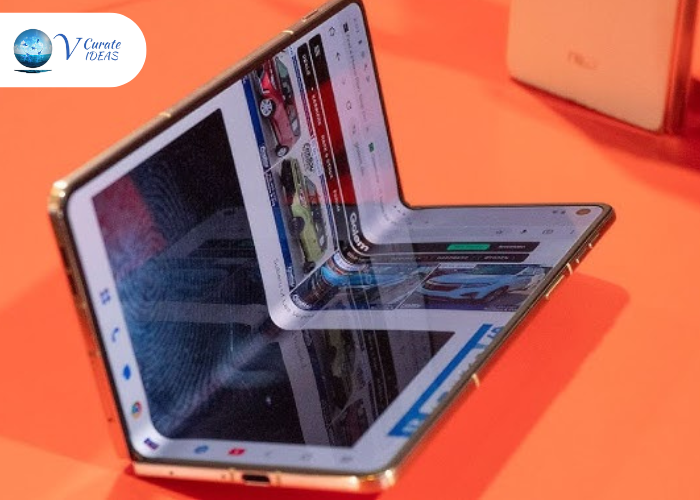
Foldable innovation meets nostalgia with style, multitasking, and Gen Z vibes.
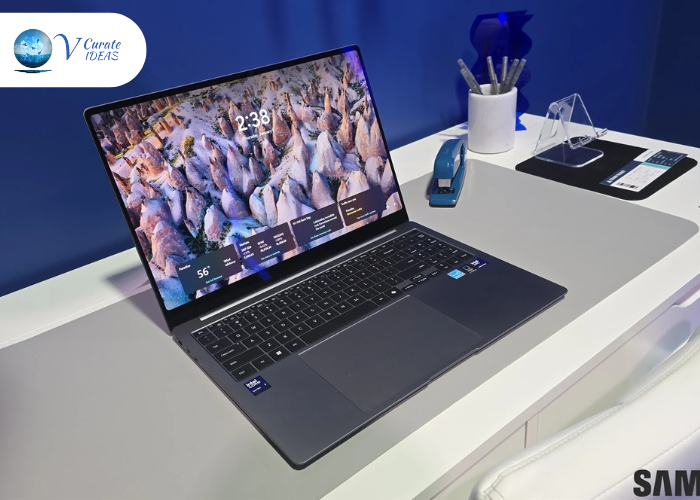
A powerhouse laptop blending creativity, AI performance, and seamless mobility.

Engaging psychological thrillers sparking conversation across cultures globally.

A bold, emotional story exploring identity, agency, and modern adolescence.
© Copyright 2019 - 2026, All Rights Reserved